Showing posts with label pioneer. Show all posts

Thursday, 5 February 2015

Runcible Spoon

Our first big project for Advanced Techniques Jewellery class was to make a Runcible Spoon.

Runcible was a term first coined by Edward Lear in 1871 in the poem The Owl and the Pussycat in the third verse.

They dined on mince, and slices of quince, 
Which they ate with a runcible spoon;   
And hand in hand, on the edge of the sand, 
They danced by the light of the moon, 
The moon, 
The moon, 
They danced by the light of the moon.

It is a nonsensical term and we were asked to design a spoon for a nonsensical purpose, which included a bezel setting.

With my interest in pioneers and landscapes I decided it could be fun to make a mini shovel which could for digging yourself out of trouble, or perhaps digging yourself deeper into trouble. Playing on the colloquial saying 'keep digging'.


Of course, not content with using hard stones which are easier to set (because they don't break) and only silver, I decided to incorporate opals I had bought in Australia at Christmas. I wanted to use opals because they are uniquely Australian, they are my birthstone, and they are made up mainly on solidified water. They are also considered a soft stone, and will chip easily.


I also wanted to make the bezel setting out of gold, because the warm colour of the metal enhances the colours in the opal.

Combining silver and gold was a new experience for me. And it took quite a few goes to get it right. At first I was using 22k gold solder to try and attach the bezel, but all I managed to do was melt the silver plate. After talking to a couple of established jewellers, they all suggested that I use silver solder instead. I did, and had a much better result. Yay! 


The shovel idea originally was going to be attached to a stick, but as the idea evolved it turned into a brooch-like pocket watch. There the handle can be attached to your sweater, and the chain is long enough for the shovel to be placed in the pocket. 

I ended up making 3 handles to get the perfect result (I didn't like the pin connection on the first one, and in the second one the stone chipped) but during the process I have ended up with a series of brooch-like pocket jewellery.

The first is the shovel, the second is a pocket thimble/bucket and the third handle is going to be attached to a handkerchief (which is still in the process of being made).

Image by Deng Chen


Thursday, 11 December 2014

End of Semester Summary

My first semester in the MFA program for studio was with Professor Gary Markle. Gary is the Head of the Fashion studio at NSCAD and he has extensive experience working in New York in fashion, film and sculpture. He was the ideal professor to work with given my interdisciplinary nature and desire to explore ideas across a range of materials.


Lichen was the launching point for a series of investigations and I represented shapes found within the lichen using paper, the lids of tins and enamel (a whole blog post was written about the enamel necklace here). The pieces also continue to reference my interest in pioneers and the isolation they experienced.


Continuing to explore my interest in women's domestic objects I made some thimbles and experimented combining porcelain with crochet and gold lustre.


Continuing to play with domestic kitchenware I was interested to see what happened when you filled the void with rocks, thinking about sense of place and your ties or attachments to a geographic location. 


Living in Canada enables me to objectively look at my Australian history and heritage. I am interested in how our ties to the past inform our present and I am exploring this through the imagery of cameos, chain and branches.


This final piece is still in the middle of being created. Originally a porcelain tea cup, it has been broken and pieced back together. All attached by a silver chain. Here I am interested in the notions of sentimentality and how we place such importance on fragile objects. 

All these ideas seem quite disparate at the moment although I am hoping to distill their essence in my next semester next year. Its going to be quite the journey! 

Thursday, 20 November 2014

MFA exhibition: Progress in Work in Progress


Earlier this week, on a rainy Monday evening, was the opening for the MFA exhibition Progress in Work in Progress at the Anna Leonowens Gallery in Halifax. 

I chose to display a work that I had created earlier in the year Bush Telegraph. Made from a collection of vintage objects, manipulated domestic ware and machine embroidery embedded in resin, Bush Telegraph refers to my current interest in pioneering history and domestic spaces. I am particularly interested in exploring how many families were isolated, both in the sense of place (as both Canada and Australia were so far away from the mother country, England) and space as some families resided many miles from their nearest neighbour or town.

Bush Telegraph 2014

Thinking about this distance made me think about communication and how this occurred between countries. Often it would take 6 months for a letter to travel from one recipient and country to the other - and how it is this communication informs my work now. I am reading letters written in the 1800s by Elizabeth Moodie, British Canadian authoress, who wrote home to her mother in England about the trials and tribulations of living in a new land. 

Bush Telegraph 2014

The exhibition contains the work of the 17 current MFA students with works that range from a short documentary by Connie Littlefield, dying with and cataloguing local plants by Anna Haywood Jones to a performance piece about looking for a short term friend by Allyse Bowd. 
Bush Telegraph
photograph by Evan Rensch

Infront of my work at the opening


Gallery view of exhibition by Evan Rensch

For more information and pictures from the opening please visit the MFA blog. 

Thursday, 30 October 2014

Lichen Brooch and Burdock Hair Pin

Along with learning enamelling, I have also been continuing to learn and improve my jewellery making abilities with Pam Ritchie. Pam is an amazing artist who often incorporates unusual materials in her work, such as plastic and found objects and she encourages her students to do the same.

Our first assignment was to make a pin back. Rather than just make a pin back, our class all decided to make an interesting pin back.

I had picked up a beautiful piece of lichen earlier in the week. Given my love of them and their relevance to my work, I thought I would include it in my pin back.

This is what I made:

Brooch with living lichen
3.3 x 6.3 cm
Pin back detail
before the lichen was attached

And our first major project was to create something that was inspired by an image that was chosen in class. The image I chose focused on communication, and also hair. So I decided to create a hair pin, in reference to Geisha. This was the final result:

Fine Silver Hairpins
containing burdock seed
Initially the pins were designed to be empty. But the wires seemed to loose definition when pinned in the hair. So it was decided that they needed to contain something.

Dried burdock seed hair pin

I stumbled across some burdock in a vacant block of land in the middle of the city, and thought that these weeds would be perfect. I see weeds as a metaphor for pioneers, or settlers.

Dried burdock detail
I was also amazed at just how sticky these seeds were. They stuck to my fingers and even plastic (just like velcro)
Green burdock hairpin
 The green seeds were less sticky.

Green burdock detail.

An exciting development with this discovery is that seeds contain so much information. So I see these hair pins containers for information or communication. Originally I was thinking about Victorian lockets and how they do this.....  Im really looking forward to exploring this concept further.


Thursday, 25 September 2014

Hyperbolic Crochet

Some of you may have heard of Hyperbolic crochet before. 

I became aware of it in 2008 when an exhibition of crocheted shapes made to resemble a coral reef were exhibited at the Haywood Gallery, London UK, where I was living at the time. The project, organised by the Los Angeles-based Institute for Figuring was a direct response to the plight of coral reef from pollution and global warming.

Hyperbolic plane where the repeat is increasing into every 5th stitch

Hyperbolic crochet is a pattern where one simply increases stitches at a regular rate in every row. The more often you increase, the more quickly the model will ruffle up. It is a pattern that replicates the geometry found in nature, such as the anatomical frills sea slugs and kelp. 

Double hyperbolic plane where the increase is one in every two stitches

 In 1997 Cornell University mathematician Daina Taimina finally worked out how to make a physical model of hyperbolic space that allows us to feel, and to tactilely explore, the properties of this unique geometry. The method she used was crochet.

Seed-pod model 

Recently it has been proposed that the shape of our universe is hyperbolic as well. 

Pseudosphere. Crochet in the round at the increase of one in every three stitches

As many of you know, my recent investigations and concepts in art focus on the Pioneer or Settler. And my interest in lichen was piqued when I undertook a residency at Hill End in 2013 and observed many different varieties growing around the area. I photographed them extensively and recorded a few here. 

My current thinking about this is that lichen can be seen as a metaphor for early settlers and pioneers. Indeed, it is even considered a pioneer plant itself.

So I am currently exploring ways of recreating lichen using various techniques. The hyperbolic plane crochet technique lends itself well to the idea, and I have undertaken some experiments using wool. My next step is to see what happens when they are immersed in a ceramic slip, or recreated using wire instead of wool.

If you would like to try making your own hyperbolic crochet forms, the pattern can be downloaded here.


Thursday, 28 August 2014

Kitchenalia

The Travellers, 2014. Image by Christina Arsenault
I was invited to participate in a group exhibition entitled Kitchenalia by curator Angela D'Elia at the Goulburn Regional Art Gallery.  17 artists who either worked with kitchen items or made works that represented kitchen items participated in the show.

I chose to submit my recent work The Travellers, made from antique kitchen strainers, combined with brass and copper patina-ed wire, machine embroidery and resin.

The Travellers was inspired by immigrants from the United Kingdom who left their homes to seek fortune and opportunities in foreign and often hostile lands when Britain was establishing new colonies in Australia and North America. Passages of writing by early British immigrants, who experienced the inconveniences of first settlement and the destruction of their precious personal items that travelled the rough bush roads to their new dwellings inspired my work. Despite adverse conditions their pioneering spirits never faltered, allowing them to follow their dreams and create better lives.

More information about The Travellers creation can be found here.


Participating artists include Jacqueline Bradley, Hamilton Darroch, Melinda Le Guay, Stephanie Jones, Waratah Lahy, Birte Larsen, Nongirrnga Marawili, Ellie Mucke, Alison Munro, Mylyn Nguyen, Susan O’Doherty, Rachael Roxburgh, Niomi Sands, Kate Ward, David Watt, Anthony Whyte and various knitters.

Kitchenalia runs from 28 August to 11 October 2014 at the Goulburn Regional Art Gallery.

Thursday, 8 May 2014

Completed Basket Rings displayed within Ceramics

Basket Rings. Photography: Christina Arsenault
A couple of months ago I shared with you the beginnings of a new series of work: baskets that are woven in metal and attached to rings, and more information on the concept behind these pieces can be found here. 

Pioneer Landscapes. Photography: Christina Arsenault

Initially they were designed to be displayed within the context of larger blocks of clay. (Further information on this concept can be found here). 

Salt of the Earth 1. Photography: Christina Arsenault

Salt of the Earth 2. Photography: Christina Arsenault
Although I also like them displayed without the ceramic pieces and just in the engraved pebbles that support them, as seen in the top image.


Thursday, 24 April 2014

The Travellers - Antique Kitchen Strainers

The Travellers
Photography by Christina Arsenault 

At the beginning of the year I found some delightful antique kitchen strainers and I immediately fell in love with their shape and form. I wanted to incorporate them into my artwork and create something beautiful with them.

Incorporating metal wire (copper, brass and silver plated that has been patina'ed) each antique strainer contains or carries a machine embroidered heart, that is incased in a resin house shape.


They certainly have character and have developed a life of their own. They became the inspiration for some stop motion animation, ending up in my 3 and a half minute animation, The Drive.

Finally I have finished a family of three 'Travellers'. Here they are


The Travellers
Photography by Christina Arsenault 

The Travellers
Photography by Christina Arsenault 

The Travellers
Photography by Christina Arsenault 


Thursday, 20 March 2014

Basket Rings

In the ring course I learnt how to make a basic ring shape through annealing, bending and soldering the metal. 

Excitedly I put my new skills to the test and made a variety of rings using sterling silver, copper sheeting and thick copper wire. 

Basket ring (in progress). Sterling silver band, woven copper, brass and silver wire.
Image: Christina Arsenault 
I wanted to experiment with small woven wire structures that were attached to the band - relating to basketry and referring to my ongoing interest with pioneers and the native foods they would have to gather and eat in their new countries.

Basket Ring. Copper sheeting with woven copper wire.
Image: Christina Arsenault 
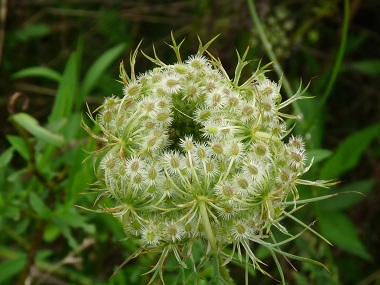
The delicate nature of the woven wire baskets reminds me a little of the flower that was abundant across Nova Scotia in summer last year, Queen Anne's Lace. After a little research I also discovered that Queens Anne's Lace is also known as 'wild carrot' and the root can be eaten, like a carrot. No doubt these plants would've been eaten by the pioneer settlers of Nova Scotia.

Queen Anne's Lace flower.

Basket Ring (in progress). Copper wire band, woven brass and silver wire.
Image: Christina Arsenault  
These rings are the beginning of a entire new series of work which I am incredibly excited about.

Im thinking I will display them with my ceramic works that look like slabs of rock cut from the earths surface. 

Thursday, 30 January 2014

Animated kitchen utensils

Over the past couple of weeks I have been learning the basics of stop animation.


You may remember my post from last week about the vintage kitchen utensils, well, my sketches for them have become the basis for my very basic stop motion animation.


The fun thing is they have all developed personalities of their own. Cheeky things!

This one above / and below, is based on an egg cup I designed in metal. Im in the process of making it! When flipped on its side it turns into a squid. Neat huh!


Thursday, 16 January 2014

In the studio: making clay and casting moulds

I have been learning to make my own clays from scratch. This is a very exciting development because I generally buy my clays in big blocks that are ready to use. So far I have made a white porcelain clay for throwing and a white porcelain slip that both fire to cone 6.
Mixing the clay bodies
 I have also been creating complex (for me anyway!) four piece moulds of food tins.

Four piece mould of a small tin of tuna.

Four piece mould of a larger tin that contained ravioli - I think. 
The tins are a confutation of my exploration of the themes of pioneers. I am particularly interested in the notions of isolation, communication and what the first settlers were reduced to eat in new and inhospitable countries.

Watch this space as my ideas progress. Exciting! :)


LinkWithin

Related Posts with Thumbnails