Showing posts with label textiles. Show all posts

Friday, 20 April 2018

Fibre Arts at NSCAD

SeaWeed inspired necklace,
felt and embroidery
by Allison

Every week in class we begin with show and tell - where my students bring in the projects they are working on that demonstrate the techniques they have learnt. 

Allison, a marine biologist, is inspired by the shapes, colours and textures of seaweed. She is creating a necklace using felt and embroidery to achieve her desired result. 

I think it is fabulous!

Friday, 13 April 2018

Contemporary Knitting and Crochet

I am currently teaching an intensive Fibre Arts four week course as part of NSCAD's Extended Studies program, which offers a wide range of short and long term course, workshops, open studios, certificate programs and online course to adults who wish to learn, improve their skills, and have fun!

In week 3 of the program we are learning knitting and crochet skills, recycling fabric and plastic bags to use as our 'yarn'. We also looked at some artists who have appropriated these skills and created large scale installations.

Crocheted playspace by Toshiko Horiuchi MacAdam

Japanese fibre artist Toshiko Horiuchi MacAdam uses knitting, crochet and knot making techniques for her work. Most popular are her "textile playgrounds” for children with their characteristic brightly-coloured net-like structures made of crocheted and knotted nylon, that are found installed in various locations worldwide.

Orly Genger yellow roped fiber installation

Orly Genger and her unique sculptural installations completely commandeer both indoor and outdoor spaces. Her installations are built entirely out of recycled rock climbing rope: stacking and knotting the fibre to transform large spaces and engage viewers.

Orly Genger gray roped fiber installation

Whilst learning the skills of knitting and crochet my students are sticking with smaller, domestic sized objects, however it is always great to know that these skills can also be applied to large scale outdoor sculptural objects too. 

Thursday, 9 November 2017

SIM residency Iceland wk1: textiles

Korpulfsstadir, Reykjavik 

I have begun my SIMs Iceland residency at Korpúlfsstaðir, a large old building (almost 100 years old) that used to be Iceland's largest dairy farm, on the outskirts of Reykjavík with beautiful view of mt. Esja and the fjords. Korpúlfsstaðir is on the eastern outskirt of Reykjavík, about 10 km away from the city centre. Korpúlfsstaðir also houses 40 SÍM artist studios, a textile workshop, a ceramic workshop, and artist run gallery. 

View of the Fjord, a 5 min walk from our residency

The attic studio - love those old wooden beams
And a very clean desk - you can tell this photo was taken on the first day here!
For the next month I will be sharing the accommodation and studio space with two other visiting artists, Kim Mirus a textile artist, and Jonathan Lipkin, a photographer. Its fabulous to have the opportunity to share with like minded people - not only are we sharing space, but also ideas and swapping of knowledge.

Outside the Alafoss wool store

Almost as soon as we landed we started exploring. Kim has been to Iceland before and was familiar with the fabulous textile stores and on the first day we visited Alafoss, a well known textile store that specializes in all things relating to Icelandic wool. Here I was introduced to yarn being sold in 'plates' and sold by weight, rather than the typical skein or ball of wool. Of course, I couldn't resist and bought some beautiful fleece with the intention of learning how to learn to drop spin whilst I was here (Kim promised to show me how!) 

The next day (Saturday 4 Nov) we travelled to Thingborg, Selfoss, another sought after textile location to buy raw untreated fleece which came in the natural colours of black, brown and white. The lopi is soft and without synthetic dyestuffs so the natural colours are truly warm and lustrous. There are two layers of wool, tog and þel, (outer- and undercoat) which are separated by hand. The “tog“ has coarse, long and lustrous hairs but the “þel” is soft, resilient and warm. It is very luscious - and it looks very different to the Australian fleece that I am used to. 

Secret Lagoon
On our drive back to Reykjavik we stopped in at the Secret Lagoon for a quick dip. Whist the weather was below zero, the water was incredibly warm and I ended up soaking in the rejuvenating waters for over an hour! I can see why the hot pools are where everything happens (business negations etc) since this is such a pleasant place to be. 

Thingvellier
Everything is breathtakingly beautiful here and at every twist in the bend we can't help but utter 'wow' as we happen upon more stunning scenery. I rely in my iPhone for most photograpy these days, and now I wish I brought my SLR (note to self: remember it next time I come).


Sunday 5 Nov required a visit to Guðrún Bjarnadottir at her dye studio in Borgarnes. Her studio, Hespa (Icelandic for skein of wool) was only open by appointment. Guðrún was so kind to welcome us and to share with us her story of naturally dyed Icelandic yarn. She specialises in lichen dye (rust colour), along with Lupin and Rhubarb (greeny yellows, both with occur in Iceland as introduced species). 


Amongst all this activity we were also actively watching the skies at night for a glimpse of the Northern lights. We have been incredibly lucky and have seen them on a few occasions. We saw the most spectacular display of green, whites and pinks dancing across the sky due to a solar storm. Now all my dreams have come true!!

Northern Lights

In order to maximize our time with the hire car, we also squeezed a day trip to Snaefellness Peninsula, which is a microcosm of all Icelands delights. We saw the elusive arctic fox, seals, glaciers and pointy mountains, a natural mineral spring (just like Sanpellegrino) which was reputably for 'people who suffer from heart and kidney disease as well as diabetes, Just in case I bottled some for the drive! 


The highlight of the day was stopping at Djupalonssandur (translated as black lava pearl beach) and it was just like stepping into a lava wonderland. It is known for its elf churches and stone trolls (rock formations) - with such descriptions, we had to visit it.


I think there is definitely magic here. 

x


Thursday, 8 June 2017

Zen Stitching : Embroidery as Textile Art


Few of us have the luxury these days to idly sit and contemplate, dwelling within the present whilst being creative with our hands. Zen Stitching aims to provide some space and time where we can learn the traditional techniques of embroidery whilst at the same time allowing ourselves to slow down. 

Sampler of some of the techniques covered in the workshop

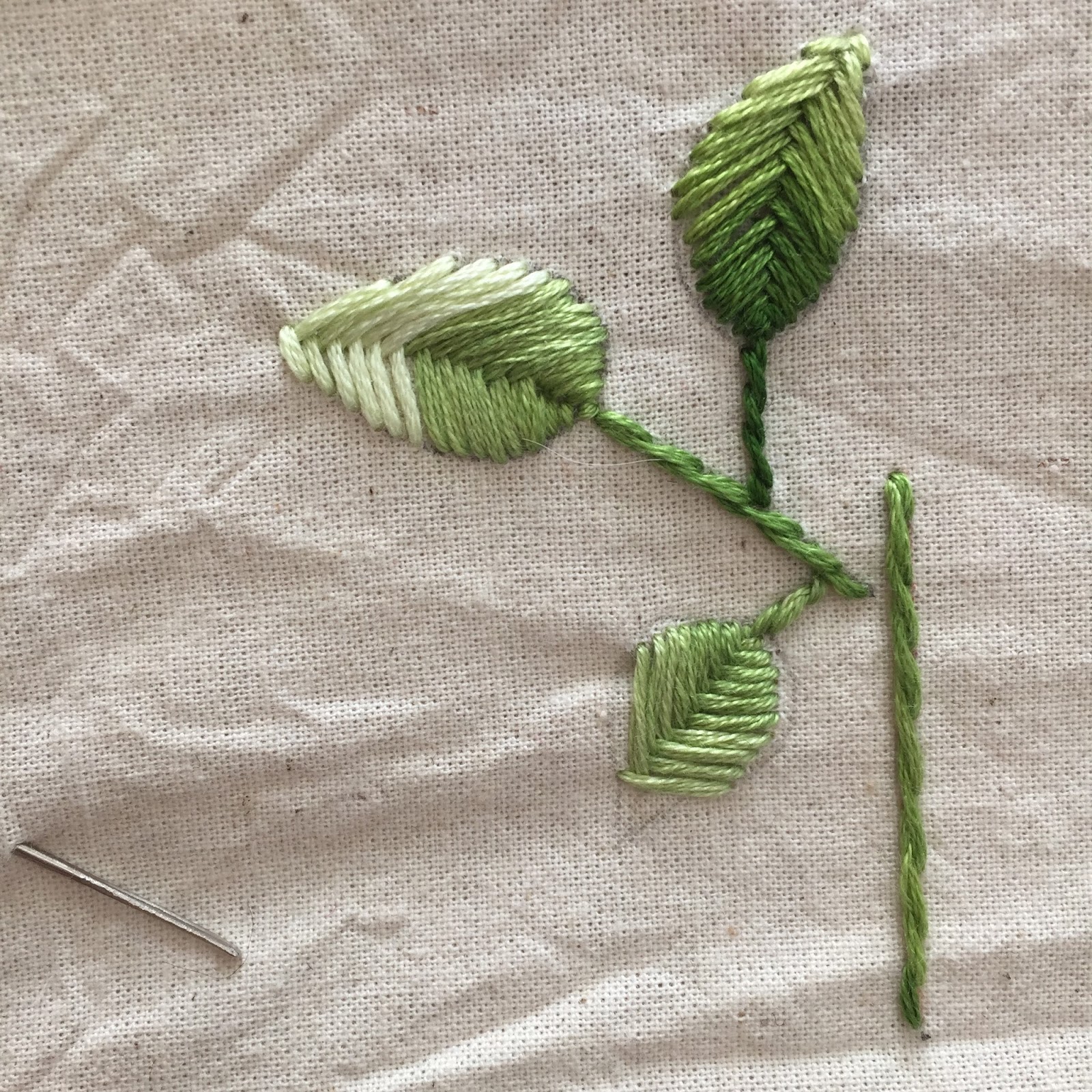
I have just completed a 2 day weekend workshop at the NSCCD where we explored a number of stitches (running stitch, back stitch, chain stitch, stem stitch, blanket stitch, satin stitch, leaf stitch and french knots to name a few!) 

The reverse side of the embroidery is just as interesting as the front

One of the participants asked how to cover the reverse side of the embroidery when using the hoop to display the embroidery. As a textile artist, I am just as fascinated by the reverse side of the material and when observing textile pieces in a gallery will try to peek behind it to see the back. Quite often this will reveal how a piece is put together - and it is just as interesting, although in a slightly different and messy way. In some senses I can relate this to life (and particularly on social media these days) how we present ourselves to the world, can quite often be the reverse on the inside. 


Being fortunate to have grown up in a family where embroidery was taught at an early age, it is an art form I return to periodically. Having just dedicated the time to share these techniques at the workshop I now have the bug to continue working on my sampler / cloth journal and create a bit of Zen magic. 

Sunday, 11 December 2016

Winter Craft Courses at NSCCD


I will be teaching a number of classes at the Nova Scotia Centre for Craft and Design as part of their Winter 2017 program. 

Irresistible Dye Techniques
Image of dyed fabric by Sarah 

Simply Irresistible Dye Techniques
Mondays, January 23 – February 27 
6:30-9:30 (18 hours/6 weeks)
$185 + materials fee $50 payable to the instructor on first day of class
Class Size: 6 (no experience necessary)

Registration Closes January 16

Simply Irresistible covers a variety of resist dye techniques including the Japanese art of shibori (stitching, wrapping, and knotting), and ombré gradient methods using indigo. We will create silk wool and cotton samples using natural dyes and experiment with alternative dye methods such as rust. Thermo-treated techniques to create three dimensional works through the use of heat are demonstrated. 

Prints Charming Screen Printing
Image of screen print by Willa

Prints Charming
Saturdays, February 11 – March 4
1:00-4:00 (12 hours/4 weeks)
$125 + materials fee $50 payable to the instructor on first day of class
Class Size: 6 (no experience necessary)

Registration Closes February 6

Design and print your own fabrics! In this course we will use screenprinting, block printing and various resist methods. This course will encourage artistic exploration of ideas using basic colour theory to mix your own colours and experiment with transparent and opaque print pastes. The skills developed in this course can be applied in the studio or on the kitchen table. 

Design and Print your own tea towel
image of block print by Natasha


Design and Print Your Own Tea Towel 
Saturday & Sunday, January 28 & 29
1:00-4:00 (6 hours/2 days)
$60 + materials fee $50 payable to the instructor on first day of class
Class Size: 6 (no experience necessary)

Registration Closes January 23

NEW! In this two-day course students will explore shapes, colours, and layering using simple stencils to create their own personalized tea towels. 

Furoshiki wrapping cloth
Image of design by Kate 


Furoshiki (Japanese wrapping cloth)
Saturday & Sunday, April 1 & 2 
1:00-4:00 (6 hours/2 days)
$60 + materials fee $50 payable to the instructor on first day of class
Class Size: 6 (no experience necessary)

Registration Closes March 27

Students can make their own reusable and recyclable Japanese wrapping cloths, both beautiful and functional used for a lunch bag, ecowrapping technique, or clothing garment. Students will experiment with different resist dying techniques using indigo dye on silk and cotton fabric. 

Zen Stitching
Image of design by Ingeborg


Zen Stitching: Embroidery as Textile Art
Sundays, February 26 and March 5 
1:00-4:00 (6 hours/2 days)
$60 + materials fee $30 payable to the instructor on first day of class
Class Size: 6 (no experience necessary)

Registration Closes February 19

NEW!  Embroidery can be a traditional, sustainable, a simple repetitive act, allowing time for reflection and bringing a meaningful and thoughtful approach to textile practice. In this two-day course students will explore ways in which to slow down by using simple techniques, reusing and re-inventing materials and limiting equipment. Take the time to think about the practical and decorative techniques of mending.

To enrol in any of these courses, call Alexis, the Studio Coordinator, at 902-492-2524

Or register in person! Come see us at 1061 (Mary E Black Gallery) or 1096 (The Studios) Marginal Rd.


Thursday, 25 February 2016

Irresistible Dye Techniques - Flour Paste Resist

It was the last of the six week Irresistible Dying Class at NSCCD on Tuesday and we saw a number of ideas and experiments through to completion. 

We had fun experimenting with cochineal dye (natural red dye that comes from a beetle) and the different colours it will create depending on the different mordants used to fix the dye. Alum created a scarlet pink/red, where as vinegar created a plum purple. 

Shiori resist using cochineal dye and discharge techniques

We dyed using different shibori resist techniques, and then combined these with the application of discharge dying (which is the removal of colour) using bleach.

silk resist dyed using cochineal and indigo natural dyes

Sophie explored stencilling a flour paste resist onto cotton. After it had dried she then brushed screen printing ink over the resist.

And making the flour resist was very easy, and much quicker than the Japanese rice paste method.

Flour Paste Resist

Ingredients
150g plain cooking flour
200ml (¾ cup) cold water
150ml (2/3 cup) liquid gum arabic

Method
Mix the cold water and flour in a mixing pot, stirring well. Heat the mixture on the stovetop, stirring continuously until a thick paste is formed.
Allow to cool slightly, then sire in the liquid gum arabic.

Strain any lumps through a sieve (very important if you want to pipe the design onto the fabric. not so important if you are painting or stencilling the design)


Sophie with her flour resist design

A detail of the flour resist
Using a similar resist method, this time gel glue on cotton, the class created an interesting resist which when dried was dipped into shibori. 

gel glue resist with indigo

We also had fun experimenting dying with rust, which is so beautiful in colour, and so easy to do. 

Dying with rust.

I have put together a pinterest board of ideas and techniques here if you would like further inspiration and ideas.

Thursday, 4 February 2016

Prints Charming: 2 Colour Prints

My Prints Charming Class is creating some wonderful 2 colour prints, using the registration methods I have taught them.

Willa printed a fox design using the same paper stencil and printing with 3 different ink colours in the first layer: orange, brown and grey.

Willa's first print using the same stencil and three different colours.

She then printed over the top of the three prints using a second stencil with black which provided detail to the foxes.

Grey Fox
Orange Fox


Brown Fox
Whilst the registration for the brown fox was misaligned, it still created an interesting image and depth of field. Even mistakes in screen printing can create exciting outcomes! 


Clive by Lyse

Lyse printed a two colour print incorporating the same registration principles. 

Its wonderful to see so many wonderful designs being created in the course.


LinkWithin

Related Posts with Thumbnails