Thursday, 25 July 2013

Prince Edward Island + Anne of Green Gables

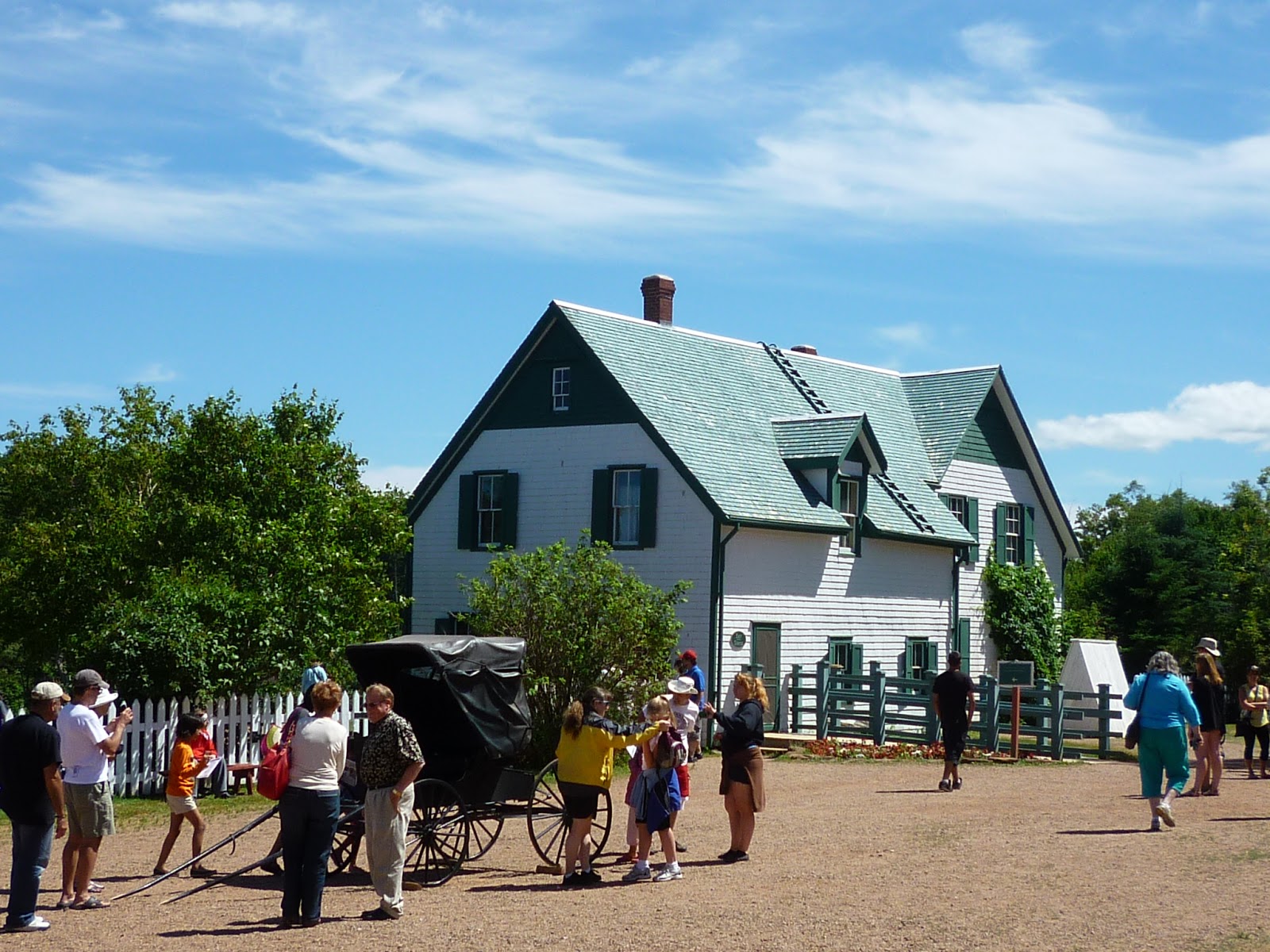
I have been getting wanting to get out and do some exploring around Nova Scotia, so I decided to go to Prince Edward Island (four hours north of Halifax) for a couple of days to see Green Gables and experience island life.


Cavendish is the home town of Lucy Maud Montgomery who wrote Anne of Green Gables in 1904, and is home for the site that inspired her novels.


 Green Gables belonged to her Grandfathers cousins and is now a national heritage site. A short walk away from Green Gables are the foundations of the house where LM Montgomery lived and wrote the novels. Also remaining are the Haunted Forrest walk and Lovers Lane, which made for a delightful stroll in the afternoon. It was also a great chance to see some Canadian wildlife and I saw Robin Redbreasts and also a Woodpecker. So cool to see these things in the flesh.


Whilst in PEI I stayed in Charlottetown, which is the capital of the island and is a gorgeous town with delicious eateries (I tried strawberry and rubarb gelato), great pubs that brew their own beer (couldnt get past blueberry beer), quiet streets that are great for strolling and lots of history and old buildings.


The island is also known for its red sand beaches and cliffs, and potatoes and to get there you can catch the ferry or take the Confederation Bridge, the world's longest artificial bridge over ice-covered waters. I got to experience both options. Fun!

Click here for more images of PEI 

This week I have been reading Anne of Green Gables (of course!) and sketching domestic interiors of Green Gables.

Thursday, 18 July 2013

Halifax: In the Studio

This week I have been spending lots of time in the studio working through my ideas.

I am still waiting for glazes and decals that have been ordered, so this week I have been exploring forms and techniques using majolica red clay and white slip made from recycled clay.

Red majolica clay with white slip and scrafito imagery
Carving shapes from clay
Meanwhile I have been learning how to whittle wooden spoons. It is very addictive and I am finding it hard to stop.
Tools and materials used to hand carve wooden spoons
& a walnut spoon in progress
The artists who are participating in the residency got together to present their work to date and to discuss what they propose to do over the next two months. It is very inspiring to see everyone's artwork and to hear what they are planning to do. To find out more about the participating artists click here. 


To escape the summer heat I have been looking for cool cafes to hang out where I can continue to read about the history and lives of women in Nova Scotia. A recent discovery is Julien's Patisserie Bakery & Cafe in the North End. They have a lovely shady outdoor courtyard and make delicious treats. I tried a praline meringue filled with hazelnut cream. Yum!

This week I have been reading:
- The 1815 Diary of a Nova Scotia Farm Girl. Louisa Collins, of Colin Grove, Dartmouth.  Edited and annotated by D McClare
- Early Voices. Portraits of Canada by Women Writers, 1649 - 1914. Edited by M.A Downie & B Robertson with EJ Errington
- Sisters in the Wilderness. The lives of Susanna Moodie and Catharine Parrtraill by Charlotte Gray

And yesterday I visited Peggy's Cove, which is about an hour south of Halifax. It is a tiny fishing village and its main tourist attraction is the lighthouse, although I felt the village itself was much more interesting. Because of its scenic views it is now also known as an artist haven and is home to many artists - it is very tempting to spend a couple of days here sketching.

Peggy's Cove

Peggy's Cove

The Lighthouse.
Unfortunately I ran out of time to sketch here but I did take lots more photos for inspiration. Click here if you would like to see more of Peggy's Cove.

Kx

Thursday, 11 July 2013

The humble spoon

My first week in Halifax was spent getting to know the city.

My second week has been about getting the bits and pieces needed to explore my ideas and concepts. Continuing my research into pioneering women and domestic spaces, upon my exploration of some of the historic sites I first noticed spoons at the Maritime Museum of the Atlantic.


Spoons recovered from shipwrecks help archaeologist's identify the ship and the number of crew aboard, as each crew member had their own spoon marked with their initials. The spoon can also assist with dating the shipwreck as the spoons can be identified by the styles produced in particular periods. 
Pretty important stuff for the humble spoon!

Since the humble spoon is so important in identifying shipwrecks I have decided to explore this object in my work. It has strong links to the Maritime. It is a domestic object. It can also be a souvenir.

Table settings apeared again at the Citadel Hill National Historic Site. 
 I like the bent spoon.


Kitchen implements and wood spoons also featured in the Quaker House in Dartmouth.


I have also been sketching the interior scenes of the Quaker House which I plan to integrate with the spoons I create.


At the Art Gallery of Nova Scotia is Canada/Nova Scotia's folk artist Maud Lewis's tiny house in which she covered every surface with her bright colours and designs.

image courtesy of Dean Bouchard
image courtesy of bitesizetravel.blogspot.com
Maud's delightful house lacked the modern conveniences of indoor plumbing and electricity but contains a lot of charm, which reflects the personalities of Maud and her husband. More about Maud can be found here.

A sketch of Maud's house.

I also hope to visit during my residency and gather more inspiration and sketches of domestic life at: 
The French Acadian Village
The Highland Village
AND
Green Gables (the house that inspired LM Montgomery's Anne of Green Gables. How cool that this place actually exists!)

This week I have been reading:
A short history of Nova Scotia by Dr Ed Whitcomb
A lady of Lunenburg, Nova Scotia 1752 by Laurel Pardy. A fascinating novel based on fact and embellished to describe pioneering life.

If you would like to see more images from my adventures click here.


Thursday, 4 July 2013

Halifax - Nova Scotia

Well here I am in Halifax, Nova Scotia.
Georges Island Lighthouse in the Halifax Harbour
I arrived without having organised any accommodation but thankfully found something on my first day (a BIG thank you to Alexis from NSCCD who helped). It is perfect and I love it! The location is very central and I can walk everywhere (essential when you dont have a car). I am sharing the flat with a photographer and an architecture student. Its great to be immersed in an arty area and be surrounded by arty people.

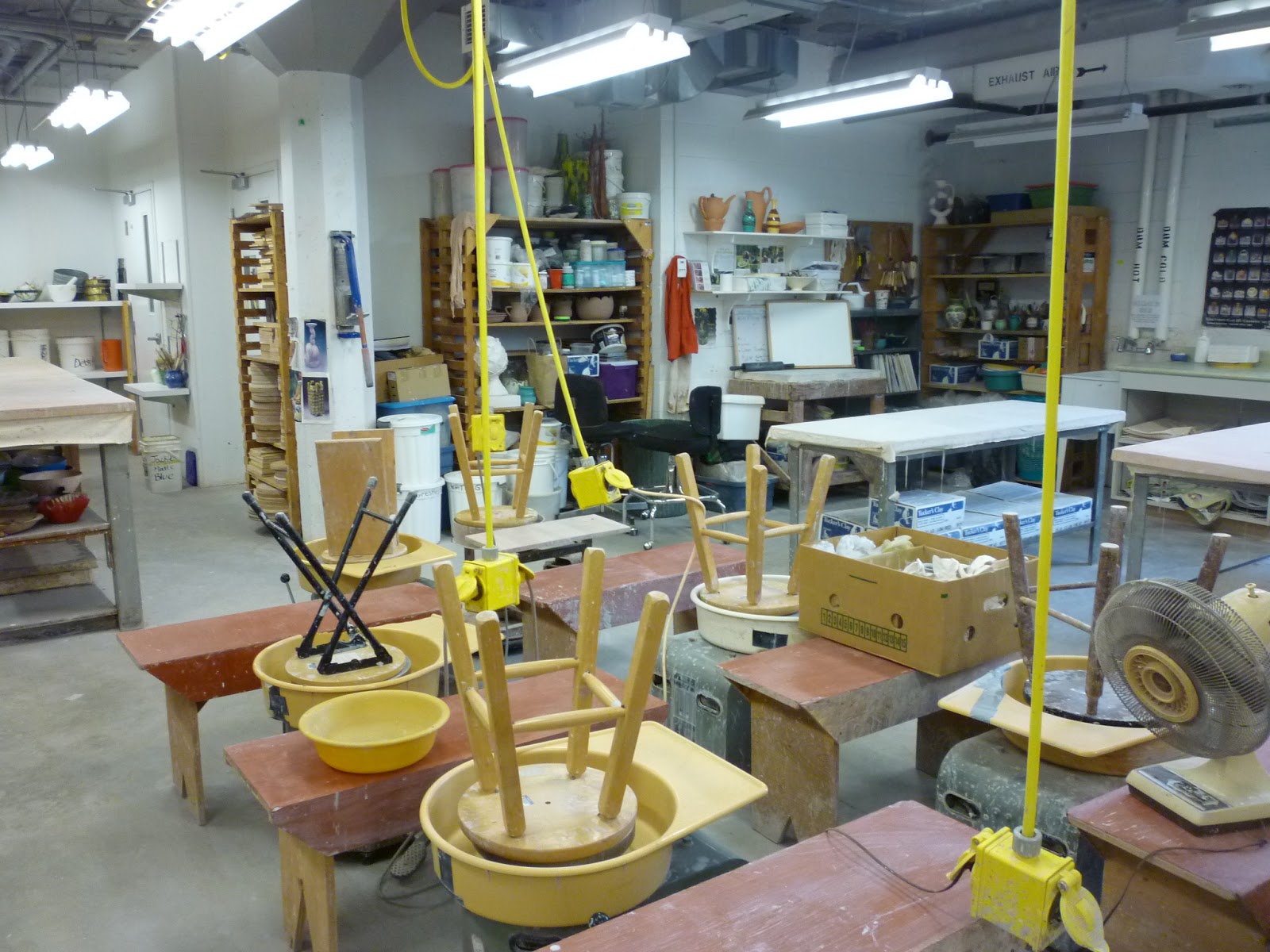
View of the Ceramic studio where I will be creating
On the first day I met the other artists who are also participating in the residency. There is a nice mix of textiles / ceramics and jewellery. Everyone is keen to collaborate and we also have access to wood working facilities (along with ceramics, textiles, metal smith and glass) so it is going to be very exciting to see what the end results will be. 

The Mitchell House near the port
So far I have spent most of my time exploring, getting to know the City. To give you an idea of scale Halifax is about the same size as Canberra but in a setting like Sydney. And its full of wonderful old buildings. As you can imagine there is lots of inspiration here for me.

Historic Properties - the oldest in town. Built in 1854
The weather for the first couple of days was cold drizzle and I was very pleased that I had remembered to pack an umbrella.
Detail of the Old Town Clock

Old Burial Grounds in the heart of the city. They date back to 1749.
Everything is very green and the public gardens are a delightful place to sit and read a book, or have a picnic.

Self portrait in park

I was lucky enough to be here on Canada Day (1 July) so I explored the Maritime Museum of the Atlantic where I saw pirates gold (so cool), ship wrecks (including a display on the Titanic) and all things Maritime. I saw the firing of the noon canon at the Citadel and spent over three hours walking through the exhibits.


I also had to try some national food, Poutine, which is french fries topped with gravy and cheese curd. Yum!

Delicious Poutine
Soon after the weather cleared and I ventured to a new part of the city, known as North End, looking for a very cool op shop called Plan B. Just when I thought I had seen all the great things in the city I saw this amazing view

Buildings in the North End, Halifax
and then I stumbled across St Georges round church.

St Georges Round Church
Walking across the Harbour Bridge I reached Dartmouth, the sister city of Halifax that was established a year after Halifax in 1750.

View from Macdonald Bridge

Dartmouth has some smaller museums including Quaker House built in 1786 and a fascinating insight into the Quaker lifestyle at this time in history. Just across the road is Two If By Sea, a cafe renown for its croissants and people watching. Of course, I had to stop and try one, on the pretence it was a good location for a sketch of Quaker House!

Quaker House
Well, thats about all for now. You may have noticed that the pictures get sunnier as my entry progresses. The drizzle has gone and has been replaced by 30 degrees C and 70% humidity. Its hot!

If you would like to see more images from my adventures, click here. 

Monday, 1 July 2013

Google Reader Changes


You’ve probably seen loads of other bloggers saying this too, but again, I’m just reminding you that Google Reader is shutting down on July 1st (this coming Monday).
If you’re subscribed via google reader and want to keep reading, you can easily resubscribe via:
  • Follow my blog with Bloglovin
  • E-mail – You’ll get the post e-mailed to you whenever I publish something new. You can do this by filling in your e-mail address in the box on the left hand column of my blog, just under where it says ‘Subscribe’
You can also follow me on twitter and Pinterest, and if you ‘like’  Facebook page, you’ll get notified in your News Feed when I have a new post up.
Thank you for following my creative journeys - its great to have your company 
x

Thursday, 27 June 2013

Hill End: In the Studio

The residency at Hill End provided the opportunity of four weeks to dedicate to my art practice. Leading up to the residency I thought four weeks would be ample time to work through my ideas and concepts. As it turned out, the time passed way too quickly, and I left with more ideas than when I arrived!

The purpose  built studio is at the back of the cottage and has the most wonderful natural light. It is heated by a small pot belly stove, which although smoked like billy-o was great for heating up water for my cups of green tea.

 I had the opportunity to teach myself how to make 2 part plaster casts and from these I made a collection of porcelain slip cast bottles.


The fences and gates in Hill End are fascinating (a post about these can be found here), and I spent time documenting them in my sketch book. I decided these would translate well into etchings using the non-toxic method I learnt a year or so ago. 

Without access to a potters wheel it provided me with the opportunity to explore making shapes using hand building methods.

The studio was just a delightful place to be in: great light, sizeable working space and surrounded by interesting objects.
Studio view
I just love the big old gilt mirror 
And the studio storage
Even the reflections are picturesque

The creativity was not contained in the studio and often spilled into the kitchen


and lounge room where I worked if it got really cold since it had a wonderful fire that I kept going day and night.
Im really looking forward to finishing this body of work, which will be exhibited at Barometer Gallery in Sydney later this year.

Thursday, 20 June 2013

Hill End: Life in a slab hut

Beautiful morning light filters through the old front windows

Ive just returned from a month artist in residence at Hill End, staying at Haefligers Cottage, where artists Jean Bellette and Paul Haefliger lived on and off during the 1940s, 50s and early 60s. Hill End became an artist community in the late 1940s and the isolated landscapes inspired many Australian artists including Russell Drysdale,  John Olsen, Donald Friend and Margaret Olley (to name a few). The cottage was built in the 1860s during the first gold rush in the area, part is built with wattle and daub construction (mud and sticks) and the kitchen is slab construction. 


I arrived just on dusk. It had been raining all day and the road from Bathurst was steep and windy. Beautiful scenery, amazing hills that look down into deep valleys, but I did not have time to stop and look, wanting to get to Hill End before dark.

Thankfully I did. I was advised to arrive early so that I could get to know the quirks of the house. There are a few. One of them is that there are no overhead lights in the cottage. Lamps illuminate everything, in the corners, near the front door, there is even one in the kitchen.

I love the old door handle to the loo

The loo
This means that at night (in winter 5.30pm) its dark outside. The lounge and bedroom (a wall has been removed so that the bedroom is raised a step and part of the main room) is illuminated by lamps which throw a lovely light, but are not so good to work by. There was also no electric lights in the purpose built studio. I quickly learned to adapt to the house, waking early to make the most of the day, and then settling down in the evening in front of the fire. This was when I read information relating to the pioneering history of the area, knit or simply to gaze at the fire and think.

View of the bedroom from in front of the fire place in the lounge  room.
Another quirk is that the house has absolutely no reception for mobile phones or internet. Before I arrived I was planning to do all sorts of things on the internet, not to mention my morning ritual of getting up, making a coffee and catching up on my emails before the day gets underway. All this changed and I relinquished my grasp on the outside world. I discovered that this was a good thing and gave me time to focus. The house also has no clocks, and since I only have my mobile phone, which in the city is many things as I can check maps, emails, time, temperature, not to mention make calls, in the bush it was just a clock - and even it stopped working!

View from the studio looking down the valley at the Post Office
The countryside was timeless and without the constant interruptions/diversions provided by technology I observed the world around me. I began to learn to tell the time by looking at the sky and shadows..... I could almost accurately guess how cold it is... (we had a serious frost one morning and to tell how cold it was I walked on it. The grass crackled underfoot and my guess was it was about -4 to -5 degrees, which was later verified through chatting the with locals in the village). Another thing was the stillness. There was hardly a noise in the valley with the exception of the abundant bird life. I could hear the geese honking across the town common and the chattering of magpies out in the garden.

I enjoyed all these things. It was quite liberating and I think it was the cottage's way of saying 'slow down, take time out and relax. Enjoy and notice your surroundings'...

The kitchen - the ceiling is so low that I could easily touch it. The cottage is gorgeous with loads of character especially being full of beautiful old furniture belonging to Jean Bellette and Paul Haefliger.

Lovely soft light filters through the kitchen windows

One afternoon I was doing a lino cut in the kitchen with the wood fire oven going to warm the room. The wiring in the cottage is so old that if you plug any two appliances into the one socket, ultimately the fuse blows. And of course, I was trying to use the iron and lamp at the same time. The lights went, which took all the electricity in the room. I was left wishing I had an old iron that could be heated on the stove!

In the studio - note the little pot belly fire in the corner


The entire place is magical and full of inspiration.

A big thank you to Bathurst Regional Art Gallery for selecting me to participate in this most amazing opportunity and an experience of a life time. I have so many ideas they will continue to inspire me for many years.

Further information if you are interested:
- An article other Australian artists who were inspired by Hill End.
- Textile artist Julie Ryder wrote a great article about her residency in Murray's cottage - the other cottage in the residency program. 
- Other artists who have participated.
- Article by Inside Out

LinkWithin

Related Posts with Thumbnails