Thursday, 17 September 2015

222 Grips for a stone #17

This semester I am the Teachers Assistant for the Introduction to Ceramics class with the delightful Neil Forrest. Neil spends his time between Nova Scotia and Scandinavia and specialises in large scale ceramics. He is particularly interested in the built environment and how ceramic sculptures interact with architecture. It is an enjoyable class and we are currently assisting the students with building large scale sculptures using slab building techniques.

This is proving to be inspirational for my artwork as well, and I have started to explore the idea of 222 grips for a stone, where the clay (consisting of minerals) becomes the stone. This is an exciting place of discovery where working with the soft clay opens more possibilities for how things can attach or grip the 'stone'.  

#17 of 222 Grips for a Stone
before firing

My first experiment consisted with embedding a large bolt into clay. This was about 20cm long and 15cm wide. It was quite heavy, and a solid piece of clay. 

#17 of 222 Grips for a Stone
after firing

The piece broke in the kiln (it wasn't 100 percent dry) and I prefer the unexpected result compared with the controlled shape. It is an earthenware clay and was fired to cone 04. I particularly like iron bolt which turned black during the firing process. 

The next step is to experiment with how certain glazes will interact with the piece, along with reduction firing, that may change the colour of the clay body.


Thursday, 10 September 2015

The beginning of the Second Year of the MFA

Its hard to believe that my summer holidays are over already! Already I am wondering how 4 months have disappeared so quickly, but when I think back to what I have achieved it makes sense. 

I received a scholarship to attend the SNAG conference in Boston in May.
I also received a scholarship to study traditional jewellery in Florence during July. 
And I was also selected to participate in Ruudt Peter's workshop Ground Now in the Netherlands at the end of July.

No wonder time has passed so quickly.

And now it is my first week back at NSCAD for the second year of my MFA (Master in Fine Arts). Due to the interdisciplinary nature of my work I have been graciously provided with a studio space at the historic Fountain campus and one down at the Port.

The Fountain studio is full of charm and character. Tucked away in the attic of an historic building, which must be over 200 years old, I am nestled in amongst old large giant wooden beams, large thick brick walls that look out over the Halifax harbour. I delight in watching the ferry go past and thinking about the history of the building.

View from my attic window
I feel a little like Rapunzel sitting up so high and watching the world go by. It is a great place to read and think. This semester I am participating in a class which discusses the philosophy and theory of Things, and I am sure you will find me tucked away in here contemplating Heidegger's Thing theory or the fundamentals of phenomenology and metaphysics.

My attic studio looking very clean and organised
My studio at the Port campus is in ceramics and allows for the messy making of larger scaled objects, particularly in ceramics but can lend itself to other forms of sculpture as well. This campus is newly built and has wonderful floor to ceiling windows with great views of the harbour (when there isn't a cruise ship in the way) and natural light.

View from Port Studio
And yes, that is a cruise ship you can see blocking the view!
My summer adventures have led me to realise that I the direction of my thesis will be changing this year. Last year I focused on the pioneer and post colonial feminist theory. My travels provided the space to critically asses my project and with my new experiences I came to the realisation that I was would like to explore the themes of place, travel, loss and regeneration - which essentially does include pioneering (so thankfully my previous research can be incorporated). However I wish to move away from the pictorial and towards a subjective, and perhaps ephemeral or atmospheric artwork.

To give you an idea of my current thinking, check out Olafur Eliasson's phenomenological art work.

Thursday, 3 September 2015

222 Grips for a Stone (14-16)

222 Grips for a Stone exploration continues....

222 Grips for a Stone
#14

#14 was made from a piece of wood with nails found in the back yard. I found the perfect stone to balance on the nails. Serendipitously it rained just before I took the photo and I like the addition of the water droplets.

222 Grips for a Stone
#15 

#15 is made from slate collected from the drive way and a piece of weathered wood found in the back yard.


222 Grips for a Stone
#16

#16 I found a rusty spring on on my wanderings around the streets of Halifax. I found the perfect bit of stone and wood to fit within the spring.

Thursday, 27 August 2015

222 Grips for a Stone (7-13)

Ive been progressing slowly this week with the continued exploration of 222 grips for a stone.

222 Grips for a Stone
#8


Im trying to restrict myself to using natural materials and/or objects that have been found in the environment.

#8 was a rusty metal piece I found on the streets of Halifax last winter. Its been sitting on my bench for quite some time as I admired it, but wasn't quite sure what I wanted to do with it. And then, I found the perfect stone to fit inside it.


222 Grips for a Stone
#9

I have been wanting to try viking knitting for quite some time. #9 is my first attempt using silver wire. I like how the stone becomes naturally polished from being handled.

222 Grips for a Stone
#10

Similar to viking knitting, #10 is created using a home made knitting nancy constructed from a toilet paper role and some popsicle sticks taped to the sides. 


222 Grips for a Stone
#11

#11 is my favourite from this series. I like the highlight of yellow lichen on the stick. And the shape of the pebble.


222 Grips for a Stone
#13

And I have even started exploring growing crystals in and around wire structures. #13 contains a crystal made from Alum.

Working through these ideas is exciting and each one generates and sparks new ideas that shoot off in different directions. Some I would like to enlarge and turn into sculptures, others I would like to translate into jewellery, whilst some ideas could be reinterpreted into ceramics. 

222 Grips for a Stone is going to be a fascinating adventure of exploration and discovery!

Thursday, 20 August 2015

222 Grips for a Stone (1-6)

As a parting gift at the Ground Now workshop by Ruudt Peters we were each given homework to continue our investigation into materials and methods of working. These were generally a follow on from our last piece of work created in the final day of the workshop. 

In my case it was a progression of the ring exploration I was undertaking. My homework was to explore 222 Grips for a Stone (or mineral).

222 is a favourite number of mine, however it is a massive undertaking to try and explore this many grips for a stone. I have made a start... here's the first 6, only 216 to go!

222 Grips for a Stone
#1

222 Grips for a Stone
#2

222 Grips for a Stone
#3

222 Grips for a Stone
#4 
222 Grips for a Stone
#5

222 Grips for a Stone
#5

222 Grips for a Stone
#6

Thursday, 13 August 2015

What Grounds You?


One of the projects we had to do at the Ruudt Peter's Ground Now workshop was to make a 1 minute video on what grounds us. We paired up in teams and were allocated half a day to work on it. This is my interpretation on what grounds me. 

Thursday, 6 August 2015

Ground Now Workshop with Ruudt Peters

Windmills in Holland
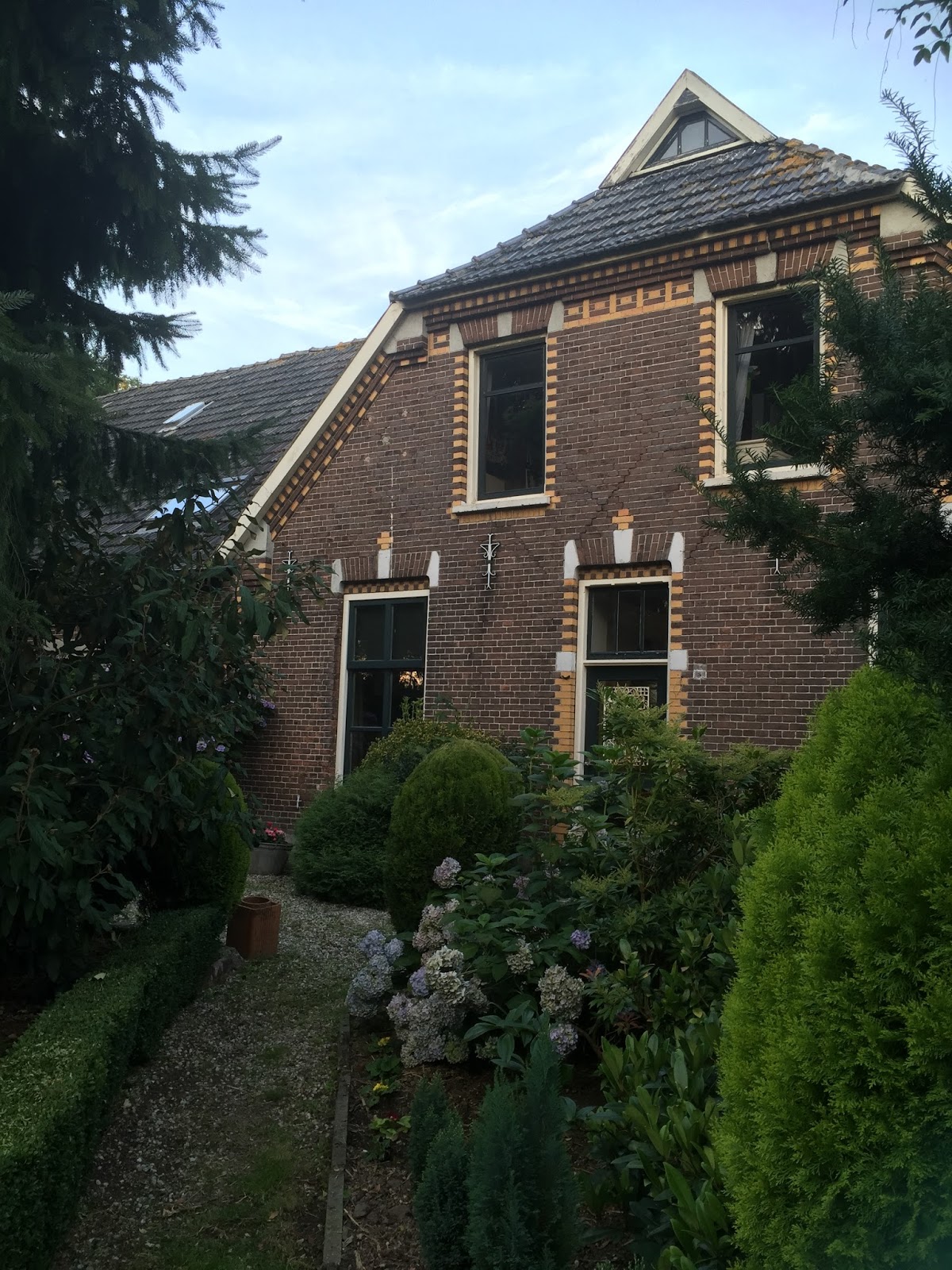
I was invited to participate in Ruudt Peter's Ground Now workshop that was held in the countryside in the south of the Netherlands from 3-9 August 2015.

The FarmHouse 
Ruudt has been a professor at two of the most prestigious universities in Europe, the Gerrit Rietveld Academie in Amsterdam and Konstfack University of Arts and Crafts in Stockholm. He has extensively exhibited his work, which can be found in many public and private collections around the world.

In short, he is a rock star in the art world!

Studio Garden 
The Ground Now workshop is intended for artists who seek to deepen their work and I was with an international group of artists from Moldova, Korea, New Zealand, America, Trinidad and Holland to name a few.

Table set for lunch
The theme of the workshop was 'Ground Now' with a focus on our feet. Often we are not aware that our feet do more than transport us. They can be used as tools and also assist to connect us to the ground.

My pair of shoes made from natural materials (leather, feathers, ivy)
We had to make a pair of shoes using natural materials ahead of the workshop. Being in Florence I used materials that were readily available : an old leather jacket someone had discarded, pigeon feathers and ivy.

Modelling my shoes
Image by Lucienne Buga 
These were then swapped with another workshop participant (Fiona) who manipulated them. Fiona joined the leather and ivy shoes together and painted them.

Shoe manipulated by Fiona.
Afterwards they were buried in the shoe grave yard.

The shoe grave yard.
 The the theme 'Ground Now' we focused on our feet as both the inspiration for our drawing and creating of objects, as well as using our feet to make images.


We also had blindfolded drawing assignments, and drawing responding to touch. These exercises were to assist us to work with 'the belly' or the unconscious, rather than our rational logical brain. 

Ruudt interpreting a blind drawing.

 We had many different experiences and assignments over the course of the week. A highlight for me was a visit to the local church that was constructed on ley lines (ancient earth lines of energy that connect spiritual sites across Europe).

The Old Church
 Using divining rods we were encouraged to find the energy lines in the area. Excitingly (and also a little mysteriously, which gave me goose bumps) most of us responded to the energy on the site. I even found the point at which the energy line entered the church site.

Searching for ley lines 
 We were also encouraged to select a natural material and spend the day investigating its potential, exploring how it reacted to different treatments. I chose to work with the discarded leather jacket, and undertook a series of treatments that involved burning, binding or boiling the leather.

leather bound around rocks using copper wire.
The results of boiling leather
boiled leather samples
The results of the experiments were exciting and often unpredictable. I found that boiling leather for 10 minutes was the most effective and it would shrink around objects, become hard and hold its shape.


Others experimented with bamboo, rice, paper, fabric, paperbark, and metal. 

My Opal ring
 We were asked to bring along an object that grounds us. I chose my Australian Boulder Opal ring, which was given to me by my Nan, and I like it because I have a piece of Australia with me whenever I travel.

the first interpretation of my ring.
 Using the ring as inspiration we had to copy it using natural materials. Because my object was so small, Ruudt encouraged me to work big.


second interpretation of ring
 Once we made the first interpretation, we had to make an interpretation of the interpretation. My second one wasn't as successful, and so I was encouraged to make more.

Third interpretation of opal ring

Fourth interpretation of opal ring
Whilst the workshop was intense (we started at 7.30am every morning with meditation and finished around 11pm after sharing a communal meal) I thoroughly enjoyed every bit of it. The environment was amazing, and it was lovely of Ruudt to share his studio space with us. The other artists participating were also wonderful and I got to know some very talented and clever people. And the best bit was that I was encouraged to grow and expand my artistic practice.

For many more images of our workshop experience visit Ruudt's Facebook page.

LinkWithin

Related Posts with Thumbnails