Showing posts with label workshop. Show all posts

Thursday, 14 December 2017

Furoshiki: one day workshop at NSCCD


On Saturday I held my final creative workshop for the year: Furoshiki. This workshop is incredibly appropriate for this time of year as we created reusable and sustainable gift wrapping using shibori resist techniques, indigo dye and cotton fabric.


In 6 hours we covered a variety of techniques including stitched resist designs, asashi (using a tube to create a pattern) itajime (folded) and tesuji (pleated) shibori. Whilst there was a lot to learn, the output was incredible, with many beautiful fabrics created in the process.

Honeycomb shibori

We marvelled at the magic of the indigo dyeing process, watching it change colour from green, to turquoise, to indigo.


Simple things such as bamboo sticks can create delightful patterns, like the one above. 

We were far too busy trying to squeeze as much in as we possibly could that I totally forgot to take a group photo of our happy creatives. But rest assured we all left tinged with blue and bitten by the indigo bug. ;) 


Thursday, 19 October 2017

Screen printing 101 at NSCCD

 On the weekend I taught a screen printing intensive workshop. Over the two days we explored stencil making, registration of two or more colours, carving a lino block and combining different methods of printing.

At the end of the two days everyone is smiling and happy with their designs.

We started by learning to design and print using one hand cut stencil and created interesting designs by mixing transparent and opaque inks, and using different colours to create complex looking designs. 


Having a love for pattern I always encourage workshop participants to explore repeat patterns.


On the second day we explored carving a lino cut, learning to incorporate the negative space into the design of the print.  


And then combined screen printing solid shapes of colour with the block print. 


By the end of the second day everyone was creating 2 or more stencil colour prints, putting into practice their new knowledge of registration.


Thursday, 8 June 2017

Zen Stitching : Embroidery as Textile Art


Few of us have the luxury these days to idly sit and contemplate, dwelling within the present whilst being creative with our hands. Zen Stitching aims to provide some space and time where we can learn the traditional techniques of embroidery whilst at the same time allowing ourselves to slow down. 

Sampler of some of the techniques covered in the workshop

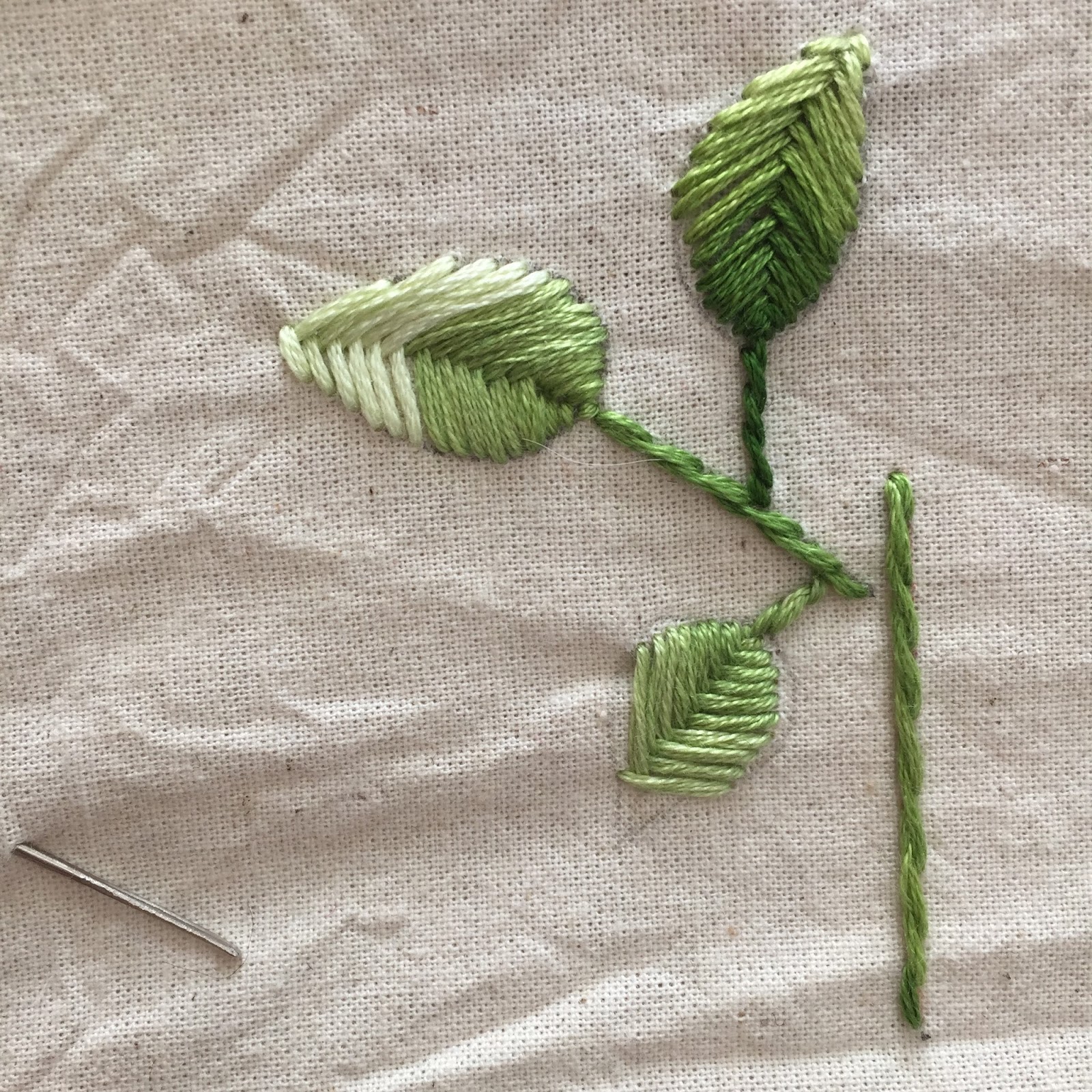
I have just completed a 2 day weekend workshop at the NSCCD where we explored a number of stitches (running stitch, back stitch, chain stitch, stem stitch, blanket stitch, satin stitch, leaf stitch and french knots to name a few!) 

The reverse side of the embroidery is just as interesting as the front

One of the participants asked how to cover the reverse side of the embroidery when using the hoop to display the embroidery. As a textile artist, I am just as fascinated by the reverse side of the material and when observing textile pieces in a gallery will try to peek behind it to see the back. Quite often this will reveal how a piece is put together - and it is just as interesting, although in a slightly different and messy way. In some senses I can relate this to life (and particularly on social media these days) how we present ourselves to the world, can quite often be the reverse on the inside. 


Being fortunate to have grown up in a family where embroidery was taught at an early age, it is an art form I return to periodically. Having just dedicated the time to share these techniques at the workshop I now have the bug to continue working on my sampler / cloth journal and create a bit of Zen magic. 

Friday, 19 May 2017

NEW!! 2 Day Weekend Tapestry Workshop


I wanted to share with you some of the exciting textile courses I am teaching at the Nova Scotia Centre for Craft and Design.

The 2 Day Weekend Tapestry Workshop is a fun course where we learn various weaving techniques suitable for creating both geometric and organic designs while exploring form, colour and texture. 
Tapestry weaving is portable, fun and expressive technique with endless possibilities to create fabric for rugs, cushion covers and decorative wall hangings. The technique is incredibly appealing as the yarns can be used to 'paint' a picture across the supporting warp.


By the end of the two days we aim to have finished a small wall hanging. 


Join me for more creative adventures. I'd love to see you there. 


REGISTRATION CLOSES : May 19, 2017


COSTS : $60 + materials fee $30 payable to the instructor on first day of class

WHEN : 12:30 - 3:30pm Sunday 28 May & 4 June 


WHERE: Nova Scotia Centre for Craft and Design, Halifax  


Thursday, 6 April 2017

Furoshiki at NSCCD


This weekend I taught a two day workshop to make furoshiki Japanese wrapping cloths. Working with cotton and silk with indigo dye we experimented with different shibori (resist dying techniques) to create beautiful fabrics that can be used as an alternative for wrapping paper.


Both beautiful and functional they can be used as a lunch bag alternative, a eco-wrapping technique, and even a clothing garment. The fabulous thing about furoshiki is that the fabric can be as special as the gift inside and it can be reused many times.


Ne-maki shibori - thread resist pattern

The end result is a gift that keeps on giving.

Itajime - folded and clamp resist pattern

For more information: 

Pinterest board for shibori designs - a collection of ideas and techniques 

Facebook page - A place where workshop participants share images of their creation

Furoshiki - fabulous site on ways to fold and wrap your present using cloth 

Honeycomb shibori

This course will be offered again as part of the Spring program at the Nova Scotia Centre for Craft and Design  over two Saturdays, May 27 and Jun 03, 2017 from 12:30 - 3:30 pm. 

REGISTRATION Details:
It is easy to sign up for a class! We need your name, contact info, and a payment.
We will take payment over the phone with visa or master card.
Pay in person with debit or cash.
**A payment must be taken to secure your spot in the class.**
Class registrations are first come first booked.
Call us! (always the best way to sign up)
Call Alexis, our Studio Coordinator, at 902-492-2524. If you're leaving a message, please make sure to - Leave your Name, Number, and the Class you want to sign up for. If you're in a hurry, you can also call Becky, our Administrative Coordinator at 902-492-2522.


Wednesday, 18 January 2017

Design and Print Your Own Tea Towel weekend workshop

I will be teaching a number of textile workshops at the NSCCD (Nova Scotia Centre for Craft and Design) during the winter semester 2017. 

Orange Fox by Willa

The second workshop I will be teaching is Design and Print Your Own Tea Towel. During this short weekend course we learn how to design and create simple stencils and explore shapes, colours, and layering working with opaque and transparent print paste. 

Experiments with overlaying coloured printing inks

We practice on cotton fabric and course participants will be provided with cotton and linen tea towels to print their final design.

It is fabulous to watch simple designs transform and become beautiful patterns on fabric.

Fun things happen when blending ink in a single stencil

The fabulous thing about this course is that all the techniques you learn during the two days are easily transferable and you can take this knowledge home and start printing on your kitchen table (if you so desire!)

COURSE DATE(S) 
Jan 28, 2017 to Jan 29, 2017
Saturday & Sunday, 1:00 - 4:00 pm
6 hours/2 days
Class size: 6 (no experience necessary)
REGISTRATION CLOSES 
Jan 23, 2017
COSTS 
$60 + materials fee $50 payable to the instructor on first day of class


Call Alexis, the NSCCD Studio Coordinator, at 902-492-2524. If you're leaving a message, please make sure to - Leave your Name, Number, and the Class you want to sign up for. If you're in a hurry, you can also call Becky, the NSCCD Administrative Coordinator at 902-492-2522.


Thursday, 17 December 2015

222 Grips for a Stone - Handles

Continuing my exploration into 222 Grips for a Stone, I thought it would be fun to literally take the idea of putting 'grips on stone'.

Working with found lumps of clay, I attached handles generally used in kitchens to create references to domestic landscapes attached to the stone. 

I liked the idea that this one references a chest of drawers.

222 Grips for a Stone
#52

Previously, the metal I had put in the kiln and fired to cone 08 was steel, and the result was that it oxidised and blackened. However with aluminium handles, the metal completely burns away, leaving a residue similar to shaving cream. 


222 Grips for a Stone
#53

Also, because I am using large blocks of clay, occasionally they explode in the kiln, leaving behind an interesting assortment of rubble (as in the image above).

222 Grips for a Stone
#55

I really enjoyed the imagery of attaching handles along the 'ridge' of a block of clay, and it immediately brought to mind the nursery rhyme Mis Marry Mack

Miss Mary Mack Mack MackAll dressed in black, black, blackWith silver buttons, buttons, buttonsAll down her back, back, back.
She asked her mother, mother, motherFor 50 cents, cents, centsTo see the elephants, elephants, elephantsJump over the fence, fence, fence.
They jumped so high, high, highThey reached the sky, sky, skyAnd they didn't come back, back, back'Til the 4th of July, ly, ly!

222 Grips for a Stone
#56

Unfortunately, these two pieces were destroyed in the firing, and I now know to attach aluminium handles afterwards.

I find it interesting that my work continues to reference  post colonialism, domesticity and feminism, even whilst I am exploring the new theme of '222 grips for a stone' and limiting my materials to found objects.


Thursday, 3 September 2015

222 Grips for a Stone (14-16)

222 Grips for a Stone exploration continues....

222 Grips for a Stone
#14

#14 was made from a piece of wood with nails found in the back yard. I found the perfect stone to balance on the nails. Serendipitously it rained just before I took the photo and I like the addition of the water droplets.

222 Grips for a Stone
#15 

#15 is made from slate collected from the drive way and a piece of weathered wood found in the back yard.


222 Grips for a Stone
#16

#16 I found a rusty spring on on my wanderings around the streets of Halifax. I found the perfect bit of stone and wood to fit within the spring.

Thursday, 27 August 2015

222 Grips for a Stone (7-13)

Ive been progressing slowly this week with the continued exploration of 222 grips for a stone.

222 Grips for a Stone
#8


Im trying to restrict myself to using natural materials and/or objects that have been found in the environment.

#8 was a rusty metal piece I found on the streets of Halifax last winter. Its been sitting on my bench for quite some time as I admired it, but wasn't quite sure what I wanted to do with it. And then, I found the perfect stone to fit inside it.


222 Grips for a Stone
#9

I have been wanting to try viking knitting for quite some time. #9 is my first attempt using silver wire. I like how the stone becomes naturally polished from being handled.

222 Grips for a Stone
#10

Similar to viking knitting, #10 is created using a home made knitting nancy constructed from a toilet paper role and some popsicle sticks taped to the sides. 


222 Grips for a Stone
#11

#11 is my favourite from this series. I like the highlight of yellow lichen on the stick. And the shape of the pebble.


222 Grips for a Stone
#13

And I have even started exploring growing crystals in and around wire structures. #13 contains a crystal made from Alum.

Working through these ideas is exciting and each one generates and sparks new ideas that shoot off in different directions. Some I would like to enlarge and turn into sculptures, others I would like to translate into jewellery, whilst some ideas could be reinterpreted into ceramics. 

222 Grips for a Stone is going to be a fascinating adventure of exploration and discovery!

Thursday, 20 August 2015

222 Grips for a Stone (1-6)

As a parting gift at the Ground Now workshop by Ruudt Peters we were each given homework to continue our investigation into materials and methods of working. These were generally a follow on from our last piece of work created in the final day of the workshop. 

In my case it was a progression of the ring exploration I was undertaking. My homework was to explore 222 Grips for a Stone (or mineral).

222 is a favourite number of mine, however it is a massive undertaking to try and explore this many grips for a stone. I have made a start... here's the first 6, only 216 to go!

222 Grips for a Stone
#1

222 Grips for a Stone
#2

222 Grips for a Stone
#3

222 Grips for a Stone
#4 
222 Grips for a Stone
#5

222 Grips for a Stone
#5

222 Grips for a Stone
#6

Thursday, 13 August 2015

What Grounds You?


One of the projects we had to do at the Ruudt Peter's Ground Now workshop was to make a 1 minute video on what grounds us. We paired up in teams and were allocated half a day to work on it. This is my interpretation on what grounds me. 

Thursday, 6 August 2015

Ground Now Workshop with Ruudt Peters

Windmills in Holland
I was invited to participate in Ruudt Peter's Ground Now workshop that was held in the countryside in the south of the Netherlands from 3-9 August 2015.

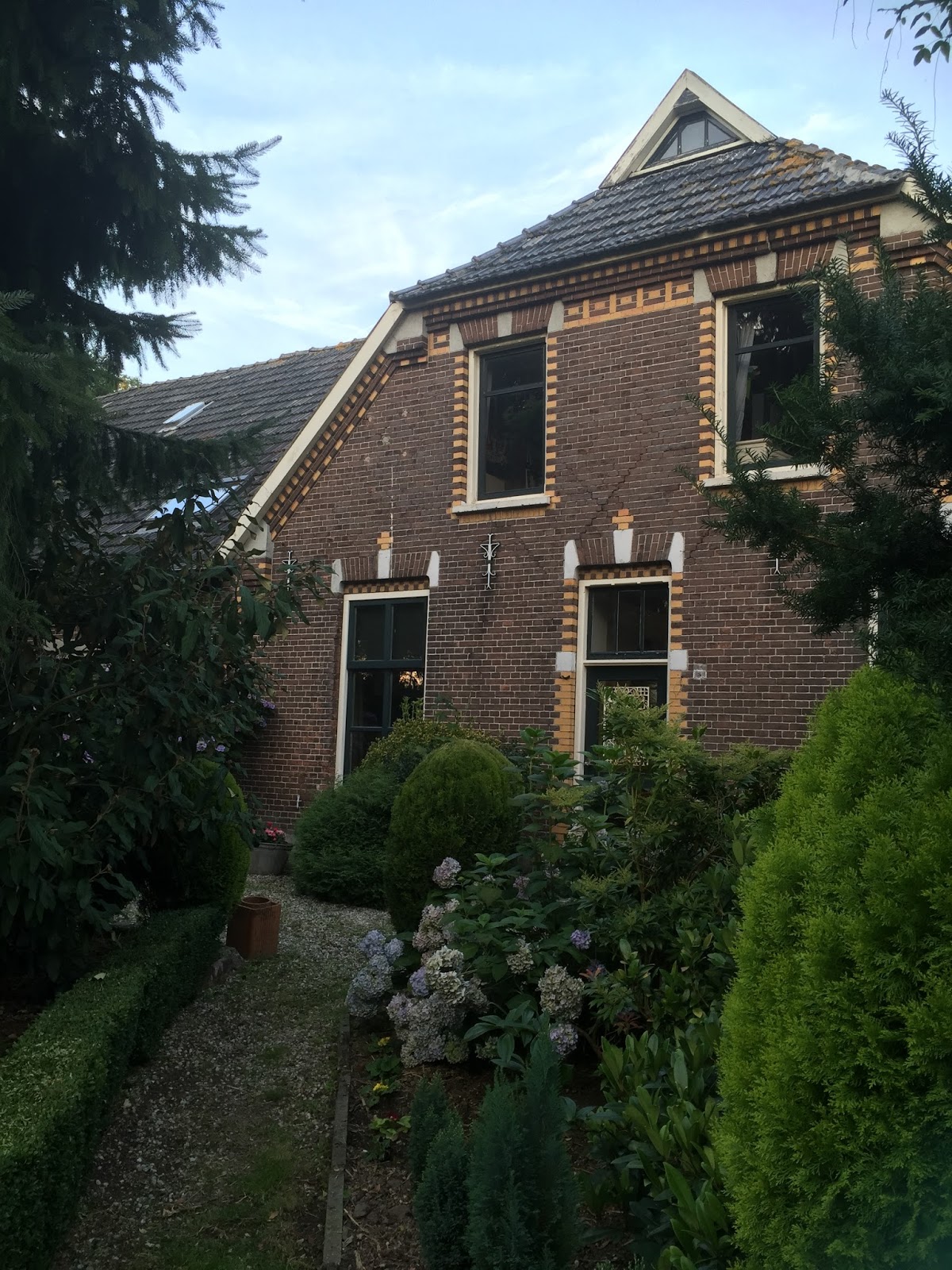
The FarmHouse 
Ruudt has been a professor at two of the most prestigious universities in Europe, the Gerrit Rietveld Academie in Amsterdam and Konstfack University of Arts and Crafts in Stockholm. He has extensively exhibited his work, which can be found in many public and private collections around the world.

In short, he is a rock star in the art world!

Studio Garden 
The Ground Now workshop is intended for artists who seek to deepen their work and I was with an international group of artists from Moldova, Korea, New Zealand, America, Trinidad and Holland to name a few.

Table set for lunch
The theme of the workshop was 'Ground Now' with a focus on our feet. Often we are not aware that our feet do more than transport us. They can be used as tools and also assist to connect us to the ground.

My pair of shoes made from natural materials (leather, feathers, ivy)
We had to make a pair of shoes using natural materials ahead of the workshop. Being in Florence I used materials that were readily available : an old leather jacket someone had discarded, pigeon feathers and ivy.

Modelling my shoes
Image by Lucienne Buga 
These were then swapped with another workshop participant (Fiona) who manipulated them. Fiona joined the leather and ivy shoes together and painted them.

Shoe manipulated by Fiona.
Afterwards they were buried in the shoe grave yard.

The shoe grave yard.
 The the theme 'Ground Now' we focused on our feet as both the inspiration for our drawing and creating of objects, as well as using our feet to make images.


We also had blindfolded drawing assignments, and drawing responding to touch. These exercises were to assist us to work with 'the belly' or the unconscious, rather than our rational logical brain. 

Ruudt interpreting a blind drawing.

 We had many different experiences and assignments over the course of the week. A highlight for me was a visit to the local church that was constructed on ley lines (ancient earth lines of energy that connect spiritual sites across Europe).

The Old Church
 Using divining rods we were encouraged to find the energy lines in the area. Excitingly (and also a little mysteriously, which gave me goose bumps) most of us responded to the energy on the site. I even found the point at which the energy line entered the church site.

Searching for ley lines 
 We were also encouraged to select a natural material and spend the day investigating its potential, exploring how it reacted to different treatments. I chose to work with the discarded leather jacket, and undertook a series of treatments that involved burning, binding or boiling the leather.

leather bound around rocks using copper wire.
The results of boiling leather
boiled leather samples
The results of the experiments were exciting and often unpredictable. I found that boiling leather for 10 minutes was the most effective and it would shrink around objects, become hard and hold its shape.


Others experimented with bamboo, rice, paper, fabric, paperbark, and metal. 

My Opal ring
 We were asked to bring along an object that grounds us. I chose my Australian Boulder Opal ring, which was given to me by my Nan, and I like it because I have a piece of Australia with me whenever I travel.

the first interpretation of my ring.
 Using the ring as inspiration we had to copy it using natural materials. Because my object was so small, Ruudt encouraged me to work big.


second interpretation of ring
 Once we made the first interpretation, we had to make an interpretation of the interpretation. My second one wasn't as successful, and so I was encouraged to make more.

Third interpretation of opal ring

Fourth interpretation of opal ring
Whilst the workshop was intense (we started at 7.30am every morning with meditation and finished around 11pm after sharing a communal meal) I thoroughly enjoyed every bit of it. The environment was amazing, and it was lovely of Ruudt to share his studio space with us. The other artists participating were also wonderful and I got to know some very talented and clever people. And the best bit was that I was encouraged to grow and expand my artistic practice.

For many more images of our workshop experience visit Ruudt's Facebook page.

LinkWithin

Related Posts with Thumbnails